Wings UP!
I’ve finally added a new album in my Picasa Web Albums. You can view all of the latest uploads in “Wings Up”.
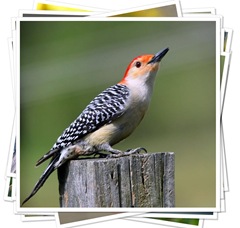
Downy Woodpecker (male)

Northern Cardinal (male)
I’ve finally added a new album in my Picasa Web Albums. You can view all of the latest uploads in “Wings Up”.
Downy Woodpecker (male)
Northern Cardinal (male)
Hey …… did you know it snowed and it’s COLD out here

I have to stay all fluffed up to keep warm

Please bring us some seeds out NOW!

This Titmouse looks a little PO’d because I haven’t filled up the feeders yet :o)
Taken during our little snow and BIG COLD spell .. shot through the window!


He had his eye on “lunch” so he let me walk very close to him.

Among the bird world’s most skilful flyers, Cooper’s Hawks are common woodland hawks that tear through cluttered tree canopies in high speed pursuit of other birds. You’re most likely to see one prowling above a forest edge or field using just a few stiff wingbeats followed by a glide. With their smaller lookalike, the Sharp-shinned Hawk, Cooper’s Hawks make for famously tricky identifications. Both species are sometimes unwanted guests at bird feeders, looking for an easy meal (but not one of sunflower seeds).
Look for Cooper’s Hawks to fly with a flap-flap-glide pattern typical of accipiters. Even when crossing large open areas they rarely flap continuously. Another attack maneuver is to fly fast and low to the ground, then up and over an obstruction to surprise prey on the other side.
Two more hummer shots from several days ago. Most of the hummingbirds have departed from this area. I have a couple that are still buzzing around the feeders.


I grabbed the little Canon P&S, jumped out of the car and started taking shots …. Mother was with me and she was just amazed at the beauty of this thing. Now, I could kick myself for not taking the time to change lenses on the DSLR and getting some decent images.
View this image at the larger size to see how pretty it is.
One lone Double-crested Cormorant on the lake yesterday ….


The double-crested cormorant is a little more than two feet long with a wingspan of about four feet. It has dark brown to black feathers, a long hooked bill with an orange throat pouch, a long tail, and webbed black feet. Adults have tufts of feathers over their eyes. Males and females look alike.
Cormorants dive for fish and marine invertebrates from the water's surface. After catching a fish, the cormorant surfaces, flips the fish in the air and swallows it head-first.
The double-crested cormorant doesn't have well-developed oil glands and isn't waterproofed very well. It often dries its feathers by perching on a pole or tree limb and stretching its wings out.

Wheel Bug, Arilus cristatus
This silver-gray insect is the largest assassin bug. The “Wheel Bug” gets its name from the structure on its thorax which resembles a gear or saw blade. It has a
hinged Beak used to inject poisonous digestive fluids into its prey, which can immobilize it in seconds.
It is then used to extract the digested Insect or Caterpillar,
leaving only the empty skin of its victim as evidence of the event
Although assassin bugs are not considered dangerous, most can bite, and should not be handled.
I was outside talking on the phone with Jan when I saw this “assassin” on my old petunias. They are truly one ugly bug!
Look at the larger size to see just how ugly he is :)

There were plenty of Great Egrets at the river yesterday, along 

He was far away but I got off one shot!
Nearly as large as a crow, the Pileated Woodpecker is the largest woodpecker in most of North America. Its loud ringing calls and huge, rectangular excavations in dead trees announce its presence in forests across the continent.

I was trying to hide in some low hanging tree branches but the Red-headed Woody spotted me anyway .. ha
An unmistakable bird, the Red-headed Woodpecker (Melanerpes erythrocephalus) is striking at rest and in flight, showing its colors of red, black, and white. It is one of the most aggressive members of the family and one of the most omnivorous
In the early morning sunlight ….


The little orange flowers are “Jewel Weed” (Impatiens capensis)
This little squirrel has become my buddy over the past few 

He makes it over to the next pole ….
He almost didn’t make the “swing” around

He’s looking at me as if to say “I knew I could do it”

Little “Kamikaze” is quite the entertainer!
(all photos are clickable for a larger view)